Letter Vintage: Capturing the Bold Spirit of 70s and 80s Design
There’s a certain warmth and energy that comes with design from the 1970s and 1980s. It was a time of bold choices, thick lines, and unapologetic personality. If you're working on a project that needs to channel that specific retro vibe, the typeface you choose is your most critical tool. Letter Vintage is a premium font family built directly from that era's visual language. It’s not just a collection of letters; it's a design asset that carries the weight and character of a bygone typographic style.
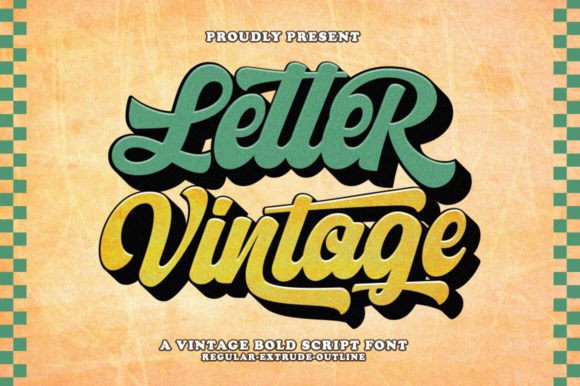
At its core, Letter Vintage is a display font. This means it’s designed to make an impact at larger sizes, making it ideal for headlines, logos, and prominent text where you want immediate visual engagement. The design is inspired by the heavy, rounded, and often slightly condensed letterforms that dominated everything from music posters to fast-food packaging during the late 20th century. You'll notice its bold typographic style immediately—characters have a strong presence, with consistent stroke widths that give them a sturdy, dependable feel. This isn't a delicate serif font or a clean sans serif font; it’s a statement piece.
Visual Character and Personality
The personality of Letter Vintage is confident, nostalgic, and full of charm. Its visual characteristics are what set it apart in a crowded market of creative fonts. The letterforms often feature subtle imperfections and rounded terminals that mimic the look of ink on textured paper or the slight wear of old signage. This gives it an authentic, handcrafted quality that digital perfection often lacks. The overall appeal is one of approachable authority—it feels both familiar and striking.
What truly makes this typeface versatile is its inclusion of a script font style. The Letter Vintage Script adds a layer of flowing, handwritten font elegance that complements the main bold style beautifully. This pairing within the same font family allows for incredible design cohesion. You can use the bold version for a main headline and the script for a tagline or accent text, creating a natural visual hierarchy without needing to source and test a second, separate font.
Where This Typeface Truly Shines
Understanding where a font works best is key to using it effectively. Letter Vintage excels in projects where you want to evoke a sense of history, craftsmanship, or retro cool. Its applications are broad, but some areas are particularly strong.
For logo design and brand identity, especially for businesses like craft breweries, barbershops, vintage clothing stores, or specialty food products, this font can become the cornerstone of the brand's visual story. It instantly communicates a specific aesthetic and values. In packaging design, it helps products stand out on shelves with a look that suggests quality and tradition.
The font is equally powerful in print and digital media. For editorial design—think magazine spreads, book covers, or event posters—it grabs attention and sets the tone. In the realm of web design, it can be used strategically for hero sections, call-to-action buttons, or banners to inject personality. It's also a fantastic choice for social media graphics, helping posts and stories feel more curated and visually distinctive in a fast-scrolling feed.
Don’t overlook its potential for personal and commercial projects alike. Crafters can use it for custom t-shirt designs, decals, and signage. Small business owners can apply it to menus, business cards, and promotional materials to build a recognizable brand. The key is matching its bold, retro character to the message you want to send.
Making the Right Choice for Your Project
Choosing a font like Letter Vintage requires more than just liking its look. You need to evaluate its fit for your specific project. Start by asking: Does the personality of this typeface align with my brand or message? If your project is modern, minimalist, or corporate, a bold retro font might clash. But if it’s artisanal, nostalgic, or creatively bold, it could be a perfect match.
Once you’re considering it, test it rigorously. Download any available specimens and set your actual project text. How does it read at the size you’ll use it? While it’s a display font meant for impact, you still need to ensure the words are legible. Pay special attention to the distinction between similar letters like 'C' and 'G' or 'I' and 'l' in all caps.
Exploring font pairing is the next crucial step. Because Letter Vintage has such a strong personality, it often works best paired with a simpler, more neutral companion. A clean sans serif font for body text can provide a restful contrast, allowing the display font to command attention without overwhelming the viewer. The included script font style is your first and most harmonious option for a complementary pairing.
Finally, review the full character set and licensing. A quality commercial font will include a range of punctuation, numerals, and possibly alternates or ligatures. Understand the license: is it for a single user, multiple users, or specific types of projects (like merchandise)? This ensures you’re using the design asset legally and ethically for your needs, whether it’s a personal blog or a client’s product launch.
In a design landscape that often leans toward the ultra-modern, there’s enduring power in typography that tells a story. Letter Vintage offers a direct line to the bold, confident aesthetic of the 70s and 80s, providing a tool that can transform a mundane project into something with depth, character, and memorable style. It’s about making a connection through visual language, one carefully chosen letter at a time.