Summit Ridge: Capturing the Spirit of Adventure in Your Designs
There’s a particular feeling you get from vintage national park signage or the bold lettering on an old trail marker. It’s authentic, rugged, and instantly communicates a sense of place and purpose. Summit Ridge is a typeface built directly from that spirit. It’s not just a collection of letters; it’s a design asset that carries the weight of mountain air and the promise of an open road. For creatives looking to inject that timeless, outdoor character into their work, this font provides a powerful and direct solution.
More Than Just a Typeface: The Personality of Summit Ridge
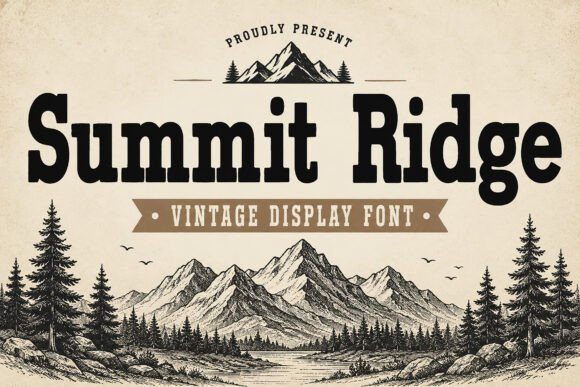
At its core, Summit Ridge is a bold, slab-serif display font with a distinctly handcrafted, retro appeal. The letterforms are sturdy and confident, with strong vertical stems and substantial serifs that echo the chiseled look of wood or stone engravings. This isn't a delicate, whispering script font; it’s a commanding voice designed to be seen and felt. The slight irregularities in its construction are intentional, giving it a human touch that digital precision often lacks. This quality makes it feel less like a product of a computer and more like a tool shaped by hand, perfect for projects that value authenticity over sterile perfection.
The personality of Summit Ridge is one of reliability and adventure. It speaks to explorers, makers, and brands that celebrate the great outdoors. When you choose this font, you’re making a deliberate stylistic choice that aligns your project with a heritage of craftsmanship and rugged individualism. It’s a creative font that doesn’t just decorate a layout—it defines the entire mood.
Where This Vintage Display Font Truly Shines
Understanding where a font like Summit Ridge excels is key to using it effectively. Its bold, high-impact nature means it’s best suited for applications where it can serve as the main visual anchor, rather than for long blocks of body text. Think of it as the headline act, with a simpler sans-serif font or a clean serif font handling the supporting role of paragraphs.
In logo design, Summit Ridge is a standout. It’s ideal for outdoor apparel brands, breweries with a rustic theme, adventure tour companies, or any business whose brand identity is rooted in nature and authenticity. The font’s strong presence ensures the logo is memorable and conveys the right values from a single glance.
For apparel graphics and print-on-demand products, its versatility is a major strength. A bold phrase set in Summit Ridge across a t-shirt, hoodie, or tote bag instantly communicates a love for the outdoors. It works beautifully for vintage badge designs, creating that coveted, worn-in look that’s popular in merchandising. Similarly, in editorial design for magazine covers or feature spreads about hiking, travel, or outdoor sports, it provides a striking and thematic headline.
Packaging design is another area where this typeface excels. Imagine it on labels for craft coffee, artisanal jerky, or camping equipment. It lends an immediate sense of quality and adventure, helping products stand out on a shelf by telling a story before the customer even reads the description. For social media graphics, a poster for a local event, or a book cover for a novel set in the wilderness, Summit Ridge cuts through the digital noise with its undeniable charisma.
Practical Guidance for Using Summit Ridge Effectively
Choosing the right font is only half the battle; using it well is what separates good design from great design. Here’s how to approach integrating Summit Ridge into your workflow.
First, evaluate the project fit. Ask yourself: does the core message of this project align with themes of adventure, heritage, craftsmanship, or the outdoors? If you’re designing for a minimalist tech startup, Summit Ridge might be a mismatch. But for a sustainable clothing line, a local hiking club, or a national park-inspired blog, it’s a perfect fit.
Next, consider font pairing. Because Summit Ridge is a powerful display font, it needs a complementary partner for readability in body copy. A clean, modern sans-serif font like Helvetica, Arial, or Open Sans creates a pleasing contrast, allowing the bold headlines to pop while ensuring the supporting text remains easy to read. A simple, old-style serif font could also work for a more cohesive vintage feel, but test it carefully to avoid visual clutter.
Always review the included styles. Summit Ridge typically includes uppercase characters, numbers, and punctuation. Knowing exactly what’s available in the character set prevents headaches later in the design process. Test the font at the actual size it will be used. A font that looks great as a 72-point headline on your screen might lose its charm if shrunk down for a small product label. Ensure the letter spacing and weight hold up at the intended scale.
Finally, respect the licensing. If you’re using Summit Ridge for a commercial project—whether it’s a client logo, merchandise for sale, or a published book—ensure you have the proper commercial font license. Using a premium font correctly is not just about legal compliance; it’s about supporting the creators who design the tools that make our work possible. By integrating Summit Ridge thoughtfully, you’re not just adding a typeface to your design assets; you’re installing a piece of authentic outdoor heritage into your creative toolkit.