Thomas: The Botanical Line-Art Font for Modern Branding
Finding a typeface that feels both innovative and timeless can be a real challenge. You want something that communicates precision but doesn't feel cold, and something with organic flair that doesn't sacrifice clarity. That's where Thomas enters the picture. This premium font isn't just a set of letters; it's a carefully crafted design system built on a botanical line-art foundation. It’s designed for the moments when your project needs to speak with quiet confidence and sophisticated naturalism.
The Anatomy of an Organic-Modernist Typeface
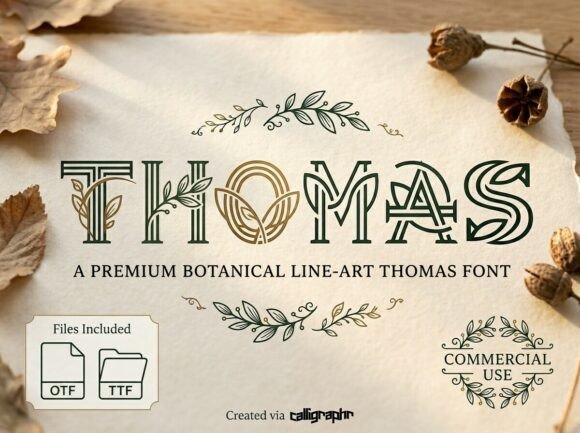
At first glance, Thomas is defined by its architectural, multi-line structure. Imagine the clean, dependable framework of a modern sans serif font, but instead of a single, solid stroke, each letterform is constructed from multiple delicate lines. This creates a sense of depth and transparency, allowing light and space to play through the characters. Woven into this geometric clarity are integrated minimalist foliage elements—subtle leaf shapes and stem-like curves that emerge naturally from the terminals and joints of the letters.
This duality is its core strength. The font balances the rigid, reliable logic of geometry with the fluid, unpredictable grace of a growing vine. The result is a display font with a unique personality: it feels engineered yet alive, transparent yet substantial. It avoids the common pitfalls of overly decorative fonts by ensuring every botanical detail serves a structural or aesthetic purpose, never becoming mere ornamentation.
Where Thomas Truly Shines: Practical Applications
Understanding a font's character is one thing; knowing where to apply it is another. Thomas excels in projects where a brand or designer wants to communicate innovation, transparency, and a connection to natural or sustainable values. Its style lends itself beautifully to several key areas.
For high-end skincare branding, it’s a natural fit. The font’s clean lines suggest scientific precision and purity of ingredients, while the organic touches evoke botanicals and gentle, natural care. It moves a brand away from the overly clinical or the overly rustic, landing in a space of sophisticated, conscious luxury. Think of it for logo design on a minimalist serum bottle or as a headline font on a sustainable packaging sleeve.
Architectural firm identities also benefit immensely. The multi-line structure mirrors blueprints and technical drawings, while the subtle foliage elements soften the inherent rigidity, suggesting a firm that designs with both form and environment in mind. It’s perfect for letterheads, website headers, and presentation templates that need to communicate innovative, eco-conscious design.
Beyond these, consider minimalist event stationery. For a modern wedding or a gallery opening, Thomas on an invitation or program sets a tone of curated, thoughtful elegance. Similarly, in editorial design, it can be a powerful tool for headlines in magazines focused on design, architecture, or sustainable living, creating an immediate visual hook that aligns with the content's themes. Its strength as a creative font also makes it a standout choice for social media graphics for influencers and brands in the wellness, design, and lifestyle spaces.
Making It Work: Practical Guidance for Designers and Brands
Adopting a distinctive font like Thomas requires a bit of strategy. It’s not a workhorse for body copy; its true power is in headlines, logos, and short, impactful text. For longer paragraphs, you’ll need a complementary font pairing. A clean, highly readable sans serif font or a classic serif font with good x-height often works best, providing a calm foundation that lets Thomas’s personality shine without overwhelming the reader.
Before committing, always test the font in context. How does it look at the actual size it will be used? Does its intricate structure hold up on a small mobile screen, or does it become muddy? Print out a sample at the size of your business card or a social media post. Review the included styles—does it have the weight and width variations you need for your visual hierarchy? A strong brand identity relies on consistency, so ensuring the font has the flexibility to handle different levels of emphasis is key.
Readability is paramount. While Thomas is crafted for clarity, its decorative nature means it’s best reserved for settings where it can be appreciated, like a large headline or a logo. Using it for a long navigation menu or a dense paragraph of instructions would likely hinder comprehension and frustrate your audience. Its role is to capture attention and set a mood, not to deliver dense information.
Finally, consider the licensing. As a premium font and a professional design asset, it typically comes with a commercial license. This is a critical step for any business project, from your web design to your packaging design. Ensure your license covers all your intended uses, whether digital, print, or in merchandise, to avoid legal complications down the line. Investing in a properly licensed font is a hallmark of professionalism and supports the type designers who create these sophisticated tools.
In the end, Thomas is more than just a modern typography choice. It’s a statement. It tells your audience that you value thoughtful design, that you see beauty in structure, and that you understand the powerful dialogue between the built and the natural world. When used with intention, it can elevate a project from simply looking good to feeling genuinely resonant and memorable.