Why the Lobster Font Still Captivates Designers
There are thousands of script fonts available today, but few have achieved the cult status of Lobster. You have likely seen it on coffee shop menus, boutique logos, and social media graphics for years. While some trends in modern typography fade quickly, Lobster remains a staple in the toolkit of many creatives. It is not just a font; it is a distinct voice. For designers, marketers, and small business owners, understanding how to leverage this premium font can be the difference between a project that feels generic and one that feels genuinely personal.
The Anatomy of a Modern Classic
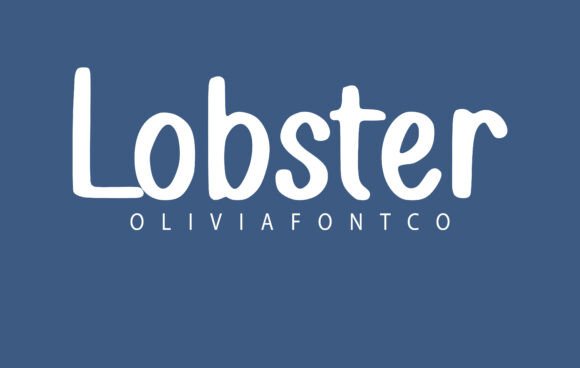
At its core, Lobster is an authentic handwritten font that balances fluidity with structure. Unlike many script fonts that rely on erratic baselines to mimic human writing, Lobster maintains a consistent baseline. This makes it incredibly legible even at smaller sizes—a rare trait for a typeface with such a strong personality. The designer, Pablo Impallari, focused on creating a creative font that avoided the "cartoonish" look often associated with brush scripts. Instead, Lobster offers a romantic, sophisticated touch that feels grounded and mature.
One of its most defining features is the use of font ligatures. In typography, a ligature occurs when two or more letters are joined to form a single glyph. In Lobster, specific letter combinations change shape depending on what letters surround them. This contextual alternates feature ensures that the flow of the word looks natural, avoiding awkward clashes between letters. The result is a typeface that feels custom-lettered every time you use it. It possesses the warmth of a personal note but the polish of professional editorial design.
Strategic Applications: Where Lobster Shines
Knowing a font looks good is one thing; knowing where to use it is another. Lobster is a display font, meaning it is designed for impact rather than long-form reading. You would not use it for a 500-word blog post body text, but it is perfect for the headline that introduces that post.
In the realm of brand identity, Lobster excels for businesses that want to project an approachable, artisan, or vintage vibe. Consider the following real-world applications:
- Logo Design: For bakeries, florists, coffee shops, or boutique clothing lines, Lobster creates an immediate emotional connection. It suggests that the product is handmade or curated with care.
- Packaging Design: On physical goods, the font works beautifully for product names. It stands out against clean, minimalist backgrounds, offering a touch of personality without cluttering the label.
- Web Design: Used as a hero text or section header, Lobster draws the eye. However, it requires careful implementation. Because it is a heavy font, it pairs best with clean, lighter sans-serif fonts for body text to ensure the page loads quickly and reads easily.
- Event Stationery: Wedding invitations, save-the-dates, and greeting cards are natural habitats for this font. Its romantic undertones make it ideal for celebrations and personal messages.
Pairing and Professionalism
A common mistake in modern typography is using a single decorative font for everything. To maintain visual hierarchy and professionalism, Lobster needs a partner. Because Lobster is curvy and expressive, it pairs exceptionally well with geometric sans-serifs or clean serif fonts.
For example, pairing Lobster with a font like Open Sans or Lato creates a high-contrast look that is easy to read. The sans-serif grounds the whimsy of the script, ensuring the design looks like a legitimate business rather than a hobby project. When evaluating your font pairing, test the contrast in weight. Lobster is naturally bold, so it works best against lighter or regular-weight body copy. If you use a bold sans-serif alongside it, the design may feel heavy and difficult to scan.
Practical Considerations for Usage
While Lobster is a powerful design asset, it requires some technical attention to get the best results. First, consider the spacing. Because the letters connect, tracking (the space between letters) should generally be left at zero or slightly reduced. Increasing the tracking too much will break the connections between the letters, ruining the handwritten effect.
Second, be mindful of color contrast. Since Lobster has a medium stroke weight, it performs best with high-contrast color combinations. Dark text on a light background is the safest bet. If you use it on a busy photograph, ensure you add a text shadow or a semi-transparent overlay to maintain readability.
Finally, while the basic version of the typeface is often available via open-source licenses, if you are using it for a major commercial rebrand or a high-volume packaging design project, always verify the specific license details. Using a commercial font correctly protects your business and supports the typographers who create these design assets.
Elevating Your Creative Projects
Whether you are a blogger creating a new header image or an entrepreneur designing a new menu, the font you choose speaks volumes before the audience reads a single word. Lobster offers a unique combination of friendliness and style. It bridges the gap between the casual nature of a handwritten font and the reliability of a standard serif or sans-serif.
It is a tool that helps tell a story of creativity and care. By using it strategically—paired with the right complementary fonts and applied to the right surfaces—you can take your creative ideas to their highest level. It proves that good modern typography is not just about choosing letters; it is about choosing the right voice for your message.