Gardenist: A Serif Font That Balances Ornate Style with Usability
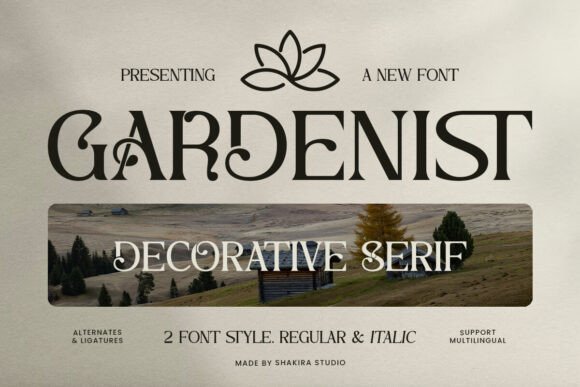
When you first see the Gardenist typeface, the immediate impression is one of crafted elegance. It’s a decorative serif font, but that simple description doesn’t quite capture its personality. The letterforms feature intricate, flowing serifs and subtle ornamental details that feel both classic and intentionally designed. It doesn’t scream for attention with excessive frills; instead, it draws you in with a confident, sophisticated charm. This is a font that understands its role: to add a layer of visual interest and perceived quality to your work without sacrificing clarity. The regular and italic versions provide a solid foundation, while the included alternates and ligatures offer a toolkit for customization, letting you tailor the typography to the specific mood of a project.
Where Does Gardenist Truly Shine?
Understanding a font’s strengths is key to using it effectively. Gardenist excels in contexts where a touch of refinement and personality is needed. Think of projects that aim for a premium, artisanal, or thoughtfully curated feel. For brand identity, it’s a strong candidate for logos and wordmarks for businesses in boutique hospitality, high-end cosmetics, specialty foods, artisanal goods, or creative studios. Its visual weight and detail make it a natural fit for packaging design, where it can elevate a product on the shelf and communicate quality at a glance. In editorial design, such as book covers, magazine headlines, or invitation suites, Gardenist brings a distinctive character that sets the tone immediately. It’s also worth considering for web design headers or social media graphics where you need a headline that stops the scroll with its crafted aesthetic, not just its size.
Practical Considerations for Your Projects
Choosing a premium font like Gardenist is an investment, so evaluating its fit is a practical step. Start by considering your project’s core message. Does it call for a traditional, trustworthy feel or a modern, artistic one? Gardenist leans toward a modern interpretation of classic elegance. Test it directly in your design software. Look at how the letterforms interact at the sizes you’ll use. For a logo, you might explore the alternates to create a unique ligature that becomes a memorable mark. For a website header, ensure the intricate details remain legible at screen resolutions. A crucial part of using any display font is pairing it wisely. Gardenist’s decorative nature means it often works best as the focal point. Pair it with a clean, neutral sans serif font for body text to ensure readability and create a clear visual hierarchy. Avoid pairing it with another highly stylized script font or handwritten font, as this can create visual clutter.
From Digital to Print: A Versatile Performer
The utility of Gardenist extends across media. The inclusion of OTF, TTF, and WOFF file formats means you’re covered for most design applications, from Adobe Creative Suite to Microsoft Office. This makes it a practical design asset for entrepreneurs and creators who work across different platforms. For digital applications, always test for on-screen readability. The font’s personality should enhance, not hinder, the user experience. In print, its details truly come alive. On textured paper stock, the elegant serifs and alternates can produce stunning results for business cards, letterheads, or promotional posters. The multilingual support is a significant advantage for brands with a global audience or for creators working on international projects, ensuring consistency in brand identity across regions.
Final Thoughts on Integrating Gardenist
Ultimately, Gardenist is a tool for adding a specific voice to your visual communication. It’s not a one-size-fits-all solution, but when the project aligns with its character—whether for a luxury brand, a special event, or a premium product launch—it can significantly influence the perception of your work. It contributes to a sense of professionalism, attention to detail, and curated taste. Before committing, take advantage of any preview options to test it with your own content. Evaluate how the ligatures and alternates work with your specific words. When used thoughtfully, this creative font becomes more than just type on a page; it becomes an integral part of the story your design tells, helping to build recognition and engage your audience on a more aesthetic level.